
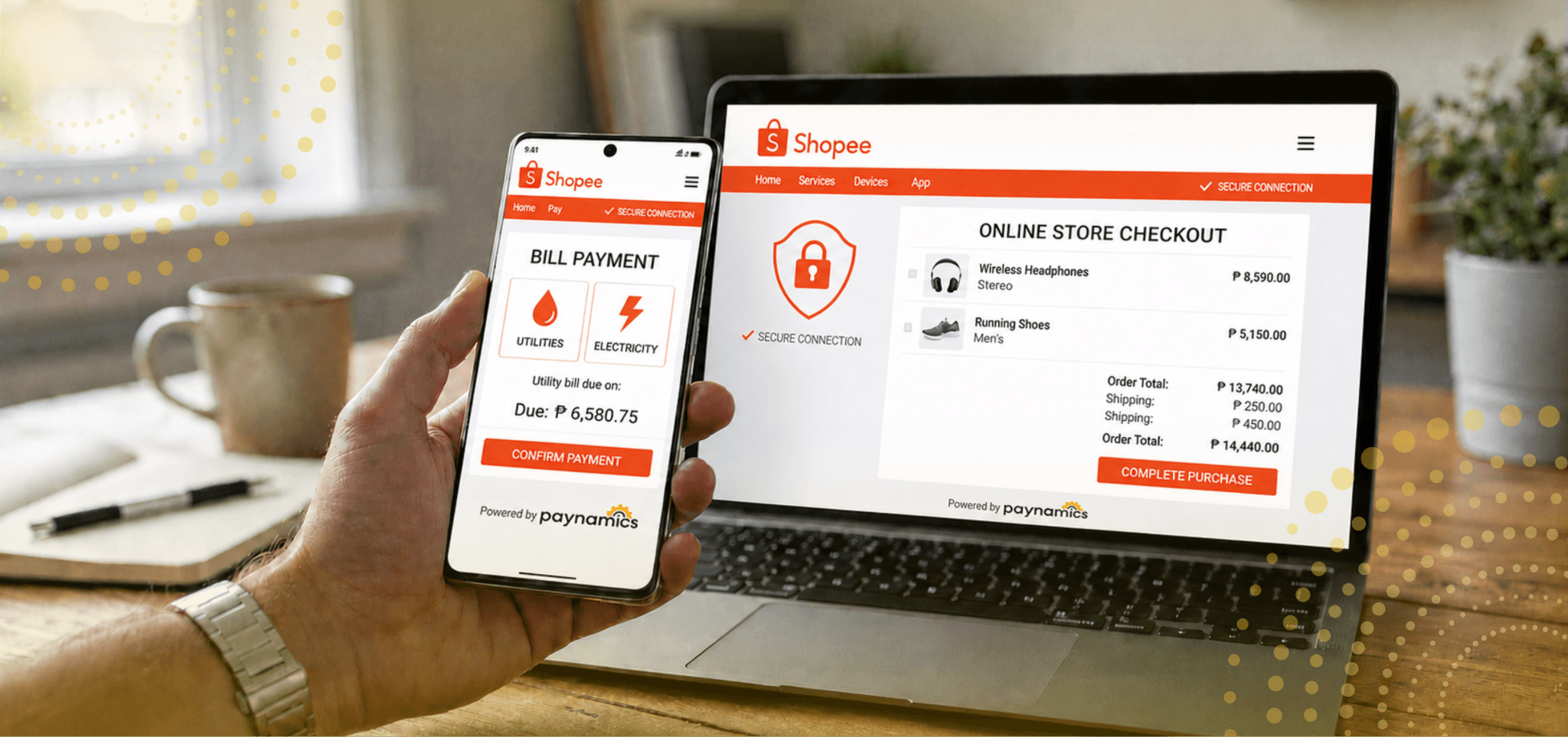
Across the Philippines, utility providers, schools, insurers, and real estate developers are moving their collections online. But most of them are running two systems that were never meant to work together: a retail-style checkout for one-time sales, and a separate billing tool for recurring payments. That split creates real friction for finance teams who need to close the books at the end of the day. This is where providers of secure e-commerce checkout solutions in the Philippines actually need to come in. It is not a patch for either problem alone, but a single, PCI DSS v4.0-ready checkout that treats a bill payment and an online sale as the same kind of event. This article walks through why that gap exists, what it costs finance teams who ignore it, and how one platform, one dashboard, and one payout system closes it for good.
When Retail Checkout Meets Bill Payment: The Reconciliation Gap
The Retail System:
Most checkout software is built with retail transactions in mind: a one-time cart, a one-time payment, a one-time receipt.
- A customer adds items to a cart.
- They make a one-time payment.
- The system generates a receipt.
- The transaction is complete.
But recurring bill payments work very differently.
Handling Recurring Payments:
- Recurring payments that happen month after month.
- Partial payments when a customer doesn’t pay the full amount.
- Late fees and penalties that change the balance.
- Account-specific payments that need to be matched to the right customer or account.
- Outstanding balances that carry over from one billing cycle to the next.
That’s where the reconciliation gap begins and what e-commerce solutions create.
When a business simply adds a retail-style checkout system to its billing operation, the payment information and billing information can end up living in two separate transaction ledgers.
What Finance Teams Manually Do:
- Payment → Customer Account → Invoice/Balance → Updated Records
And that can mean hours of manual reconciliation at the end of every month.
The Simple Goal:
- Customers pay online → payments are correctly matched to their accounts → balances stay updated → finance spends less time reconciling transactions manually.
That’s what makes an online checkout solution truly useful for a billing operation: it doesn’t just process the payment; it helps keep the entire payment-to-account workflow connected.
One Transaction Type, One Dashboard: Real-Time Visibility for Finance Teams
When bill payments and e-commerce sales flow into the same system as they happen, finance teams get a much clearer picture of what’s happening with their money without waiting for end-of-day batch reports.
With real-time transaction reporting, billing and finance teams can see:
- Bill payments and e-commerce sales in one feed.
- Transactions as they happen, rather than hours later.
- A live view of cash activity across different transaction types.
- Less reliance on separate gateway logs and settlement files.
- Fewer manual steps when tracking and reviewing payments.
That’s the model behind Paynamics’ real-time transaction reporting.
Ending the Reconciliation Guesswork With Real-Time Reporting
Manual reconciliation becomes difficult when the records you’re comparing don’t arrive at the same time.
For example, a sale may appear in the checkout system immediately, while the corresponding settlement file might not be available until a day or more later.
That creates a familiar finance-team routine:
- Check the checkout receipt.
- Look through the payment gateway records.
- Wait for the settlement information.
- Compare it against the internal ledger.
- Manually confirm that everything matches.
And when you’re processing hundreds or thousands of transactions, that small delay can turn into a significant amount of administrative work.
A live transactions report on the Paynamics dashboard helps close that gap by giving teams real-time transaction visibility on both sides.
Beyond Reconciliation: Getting Paid Faster With T+1 Payouts
Real-time transaction visibility solves one part of the problem. The next question is: When does the money actually reach the merchant?
That’s where faster payouts come in.
Paynamics combines its live transaction dashboard with payout automation, helping funds from completed sales or bill payments reach a merchant’s account on the next business day (T+1) rather than remaining in a settlement queue for several days.
That shorter gap between collecting the payment and receiving the cash can make a real difference for businesses managing day-to-day working capital.
For example:
- A school collecting tuition can access collected funds sooner.
- A utility receiving monthly dues can improve cash availability.
- A business processing e-commerce sales can reduce the waiting period between customer payment and usable funds.
So, the benefit isn’t just better reporting. It’s a more connected payment cycle:
5 Hidden Costs of Manual Reconciliation That Are Quietly Shrinking Your Margins
Manual reconciliation rarely shows up as its own budget line, which is exactly why it’s easy to underestimate. Here are five ways it drains a business that already suspects something is off.
1. The Labor Cost No One Puts on a Budget Line
Hours spent by finance staff matching receipts to settlement files are hours not spent on forecasting, collections follow-up, or planning — a cost that never appears on an invoice but shows up in overtime and turnover.
2. The Cash Flow Blind Spot
When settlement data lags, finance is forecasting cash position on incomplete information, which makes it harder to time vendor payments, payroll, or new investment with confidence.
3. Revenue Leakage That Hides in the Gaps
Duplicate charges, missed refunds, and unmatched transactions are easy to miss when reconciliation happens once a month instead of continuously — and every unmatched entry is money that’s hard to trace back.
4. The Multiplying Complexity of Fragmented Channels
Every new payment channel a business adds, such as cards, e-wallets, or bank transfers, multiplies the number of ledgers finance has to reconcile by hand, and the workload grows faster than the transaction volume itself.
5. The Audit and Compliance Tax
Incomplete or delayed records mean more time spent preparing for audits and less confidence in the numbers being presented, which is a real cost even when it never turns into a fine.
Build One Secure Checkout With Paynamics
This is the shape of an ideal finance team for your provider offering secure e-commerce checkout solutions in the Philippines. Paynamics is a BSP-supervised electronic money issuer with PCI DSS v4.0 certification, serving over 5,000 merchants across more than 50 payment channels. Its checkout solution handles one-time and recurring transactions on the same system, which means a school collecting tuition and CSR donations, an insurer running tokenized and click-to-pay premiums, a real estate developer collecting HOA dues, or a retailer with a physical storefront can all rely on the same secure e-commerce platform instead of stitching together separate tools.
For businesses without the resources for full API integration, or without a website at all, Paynamics’ ready-made payment pages provide the same real-time reporting and next-day payouts, and travel and tourism operators collecting booking fees can rely on the same wallet ecosystem to do it. With enterprise and government experience behind it, Paynamics positions itself less as a vendor and more as the payment infrastructure layer that lets finance teams stop reconciling and start reporting.
Conclusion
Bill payments and online sales don’t need two separate systems, two separate ledgers, or two separate headaches. Any provider of secure e-commerce checkout solutions in the Philippines brings trust to both transaction types onto one platform, gives finance a real-time view through a single dashboard, and pays out in T+1 instead of leaving cash in limbo. That combination of one checkout, one dashboard, one payout cycle is what turns reconciliation from a monthly scramble into a non-issue.
If your team is still stitching together checkout logs and settlement reports by hand, it may be time to talk to the Paynamics team about what one secure checkout could do for your operation.