
Introduction
If you ask a finance head at a Philippine school, an insurer, or a property developer how collections work, you’ll very often hear about a drawer full of post-dated cheques, a spreadsheet full of card details that just shouldn’t be there, and a bank report that comes in three days late. Charges will fail without any warning. Someone has to call the customer. Someone else will go and manually fix a cell in a spreadsheet. Guesswork has become the norm.
Billers using credit card payment processing providers in the Philippines can finally stop guessing. With processing set up for recurring bills, you can plan your cash flow, and the checkout page is no longer the sole point of focus.
This article covers four key areas: the security behind reliable credit card payment processing, tokenized enrollment for Auto Charge Arrangement (ACA) and Auto Debit Arrangement (ADA), why recurring payments fail, and how real-time dashboard reports and automated T+1 payouts can end manual reconciliation.
What Makes Card Processing Reliable: A BSP-Supervised, PCI DSS v4.0-Certified Foundation
PCI DSS is the set of rules governing how card data is stored, processed, and transmitted. Version 4.0 was released in 2022 with 64 new or revised requirements. Providers still on the old standards are now effectively behind. A significant number of the controls relate to authentication and the protection of web payment pages, which is the area of greatest risk for billers.
Certification is only half the story when it comes to a provider’s reliability. Regulation is the other half. The Bangko Sentral ng Pilipinas regulates Electronic Money Issuers and payment system operators and has recently raised the bar for governance, prudence, and capital.
For the biller, this means the processor is regulated and has the wherewithal to keep going. So when you’re looking at the credit card processing PCI requirements, you need to check who the certificate holder is and who the regulator is.
A finance head can ask any provider a few straightforward questions:
- Is the PCI DSS certification current, and does it cover v4.0?
- Which regulator is it under?
- Has it got enterprise and government volume?
Choose a solutions provider that can answer yes to all of those: BSP-regulated, PCI DSS v4.0 certified, and has the experience of running enterprise and government volume. That experience gives them the credibility to advise from a day-to-day operational perspective.
From One-Time Enrollment to Predictable Collections: PCI DSS v4.0 Tokenization for ACA and ADA
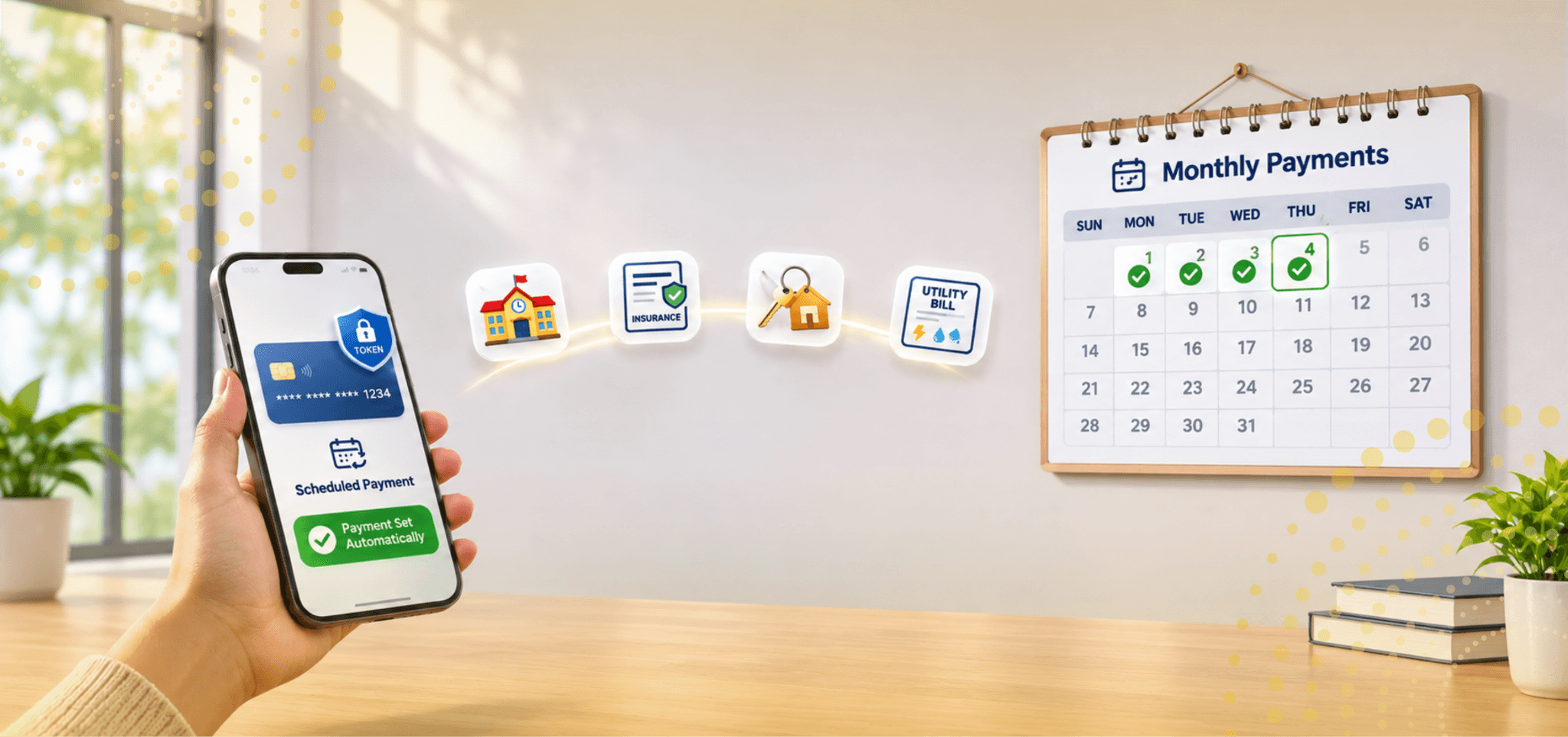
Tokenization replaces the card number with a random string that only works within the issuing system. When you enroll online, you enter your card details once on a secure page, and the system turns those details into a token. All future charges are then made using that token. The biller never actually stores the card number, so there’s nothing sensitive in a spreadsheet or an inbox.
Previously, enrollment relied on paper forms, signatures, and manual encoding. Now a payer could authorize a recurring schedule from their phone, and the biller would see the enrolled account on the dashboard. The net result was a higher collection ratio.
Security also reduces the compliance burden. The card data is replaced with tokens, so fewer of the biller’s systems process the sensitive data, and audits are much easier. Payers enrolling from their phone will see the process as very similar to using a credit card payment app, and it takes around a minute to complete. Billers can see how this works in a hosted payment flow that brings together enrollment, the charge, and reporting.
Fewer Failed Payments, Higher Collection Ratios
Recurring collections fail for the most obvious reasons. The card expires or gets replaced when it’s lost. There may simply not be enough funds on the due date. The customer may have changed their contact details and failed to update the biller. That’s what subscription businesses call involuntary churn.
For a biller in the Philippines using credit card payment processing providers, the fix starts at enrollment: the payer authorizes a schedule and no longer has to remember each month. The payment dates are in the biller’s system, so reminders and retries run on a schedule rather than over the phone. You can actually offer two routes: ACA will charge the card for those payers who have one for their bills, and ADA will pull from a bank account for those payers who would rather have that.
The wider market is moving in the same direction. The BSP and Philippine Payments Management Inc. launched Direct Debit PH on 29 July 2026. This allows customers to authorize billers to collect from their bank or digital wallet account on a set date. The older auto-debit systems were limited to one bank only. The demand for an authorized, automated collection is clearly on the rise, and those billers who are already on a direct debit system will be the first to adapt.
No More Manual Reconciliation: Real-Time PTI Dashboard Reports and Automated T+1 Payouts
Finance teams at the billers will often spend their weekends doing manual matching. They’ll be matching the bank statements against the enrollment lists, chasing up failed charges and explaining the exceptions at month-end. Errors can occur, and the process of closing the books can take a long time. The problem worsens as the volume of digital transactions grows faster than back-office processes can keep up.
Every ACA and ADA transaction is live on the PTI dashboard in real time. Finance teams can see immediately what’s been collected, what’s failed, and what’s still pending, so every credit card payment is recorded before the end of the month. There’s no need to go back to the bank statements to piece it all together.
T+1 means settlement occurs on the next business day. A payment processing provider using new payout automation is T+1, with a report that maps each payout back to its transaction. Money gets there faster, and the books stay accurate. Because payment acceptance, payouts, and the wallet all run on the same platform, finance teams work from one set of books.
How 5 Types of Billers Turn Auto-Charge and Auto-Debit into Predictable Cash Flow
Each biller type below has a recurring payment challenge (quarterly or annual), and one missed payment can result in a policy lapsing. ACA enrollment maintains the premium schedule via a tokenized card. BIN filtering runs dedicated product campaigns, enabling insurers to test and pre-launch products with targeted cardholders from selected issuing banks.
Insurers
Premiums come due monthly, quarterly, or yearly, and one missed payment can cause a policy to lapse. ACA enrollment keeps premiums on schedule through a tokenized card. Bank Identification Number (BIN) filtering runs exclusive product campaigns, letting insurers test and pre-launch products with targeted cardholders from selected issuing banks.
Schools
Tuition is paid in installments, and registrars will spend a lot of time chasing late payments. A parent enrolls once, and then pays each term on time. The finance office can then track it all on the dashboard.
Real Estate Developers
Buyers pay their monthly amortizations over the years, and the HOAs collect their dues from a number of households. Online ACA/ADA enrollment turns these into standing instructions.
Utilities and Essential-Service Providers
Water, power, and telecom bills all come due on a set schedule, and missed payments can result in service being disrupted. Automated collection helps to reduce the number of missed due dates, although payers can of course still use other channels if they wish.
Government and Private Enterprise Billers
The DILG has been pushing LGUs to go cashless in collection, and private sector players are under pressure to do the same. Online enrollment and live reports provide treasurers with clean, auditable records from collection to payout.
Make Payments Seamless with Paynamics Checkout
Paynamics Checkout provides over 50 payment channels, PCI DSS v4.0-certified tokenization for ACA and ADA enrollment, and a reporting layer on the PTI dashboard, all in one platform. Predictable collections are simple: one-off enrollment, automated recurring charges, and automated T+1 payouts. Billers with no developers and no website can utilize ready-made payment pages that don’t require any API integration.
The wallet portion of the platform supports QR codes and payment links (including booking fees for travel and tourism). For billers handling school fees, premiums, HOA dues, utility bills, installments, QRPHs, etc., it supports repeat payers. It’s BSP-supervised and has a network of over 5,000 merchants.
Conclusion
Reliable card processing is all about certified security, tokenized enrollment, low failed-payment rates, and real-time visibility with T+1 payouts to finish the job. Billers who get it right no longer have to guess. If you’re looking for credit card payment processing providers in the Philippines, talk to our Paynamics experts about ACA and ADA enrollment. Explore Paynamics Checkout and the other solutions we offer, such as payment acceptance, payouts, and the business wallet.